
Long-Term Forecasting Review: Political Forecasting and In-Depth Analysis, Volume 1, Issue 1, February 2026
Hong Kong people who are still not awake
Ye, Qiquan
| First release date: | October 11, 2014 |
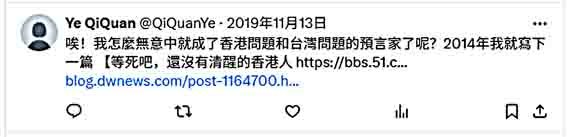
| Reference data element: (APA) |
| Ye, Qiquan. (2026). Hong Kongers who are not yet awake. Political predictions and in-depth analysis. 2026. Vol. 1(1), 8-7. |
| Abstract: Since 2003, Hong Kong people have gained considerable short-term political benefits from the central government through large-scale political marches. These benefits have encouraged the inertia and enthusiasm of Hong Kong people in organizing large-scale marches. However, these actions have seriously damaged Hong Kong’s political and economic prospects. Political and economic decline in Hong Kong is inevitable. The probability of Hong Kong continuing under “two systems” or “autonomy” after 2047 is close to zero. The probability of Hong Kong being divided into three or more parts by 2047 is close to 100%. Stubborn or hardline anti-central government forces will face inconsistent treatment. |
Keywords: Hong Kong; demonstrations; political gains; long-term prospects; one country, two systems;
The Occupy Central movement in Hong Kong has recently reached a new climax. The contempt and disdain for Hong Kong people are growing increasingly severe. It can be clearly predicted that Hong Kong people are destroying their own future, in every aspect—economic prospects, political future, and personal dignity.
Regardless of the guise or banners used in Hong Kong’s political marches, they all share one goal: to oppose the central government, the mainland, mainlanders, and everything related to the mainland. (Hereinafter, all types of marches in Hong Kong will be referred to as “anti-China marches.”)
The underlying reason that prompted Hong Kong people to do this is their folly. They believed that through massive pressure, they could achieve their ultimate goal: “Hong Kong independence,” including “permanent independence,” “similar to complete independence,” or “permanent de facto autonomy.”
There is a key historical turning point in the anti-China protests in Hong Kong: the massive protests that began in 2003. Since then, the anti-China protests in Hong Kong have consistently been characterized by their large scale, high-pressure tactics, irrationality, and absurdity.
A review of the history of large-scale protests in Hong Kong fully demonstrates the completely different political maneuvering methods employed by Britain, mainland China, and the Hong Kong Special Administrative Region.
As an old empire, Britain has fully inherited the British tradition of being a “political troublemaker.” They are extremely adept at seizing political opportunities. By manipulating fleeting moments and creating chaos, they gain political advantage. When the Hu-Wen government first came to power in 2003, they lacked effective means to pressure the British government (for whatever reason). The British government preemptively launched a “large-scale rebellion” in Hong Kong and succeeded on the first try. Since then, launching (or supporting) a rebellion in Hong Kong has become an effective means for the British government to blackmail the Chinese government.
The Chinese government’s political maneuvering is completely inferior to that of the British. The only commendable aspect is their adherence to the “Hong Kong people governing Hong Kong, it’s none of my business” firewall. They haven’t shown excessive panic (for whatever reason). No matter the excuses, the weakness and political incompetence of the Hu-Wen government cannot be concealed. This is also the basis for the British’s continued blackmail of the Chinese government.
Hong Kong locals are a special group. They will become the most pitiful group in the anti-China movement in Hong Kong, destroying their own promising future. This article mainly discusses them.
I. Political Vanguard Blinded by Illusions
Hong Kong’s political forces probably didn’t anticipate that a sudden political march in 2003 would unexpectedly succeed. Since then, launching large-scale marches has become a regular and effective means for Hong Kong’s local political forces to blackmail the central government.
Having tasted its effectiveness, Hong Kong people have no reason not to utilize such a tactic. It’s predictable that they will continue to use this seemingly long-term effective method. No need to consider reasons, no need to consider excuses.
II. Political Idiots Driven by Lies
It can be clearly inferred that the large-scale anti-China movement in Hong Kong was primarily initiated, promoted, and managed under British manipulation. The possibility of other anti-China forces’ phased or sustained involvement cannot be ruled out.
The core element of the anti-China movement lies in the almost universal active participation of Hong Kong people (which can be substantially defined as rebellion). Hong Kong people have been driven by the “past successes of the anti-China movement” and the “inevitable future success.” The biggest driving force comes from the “political, economic, and diplomatic support from Britain and its allies.” This support has built an “unwavering lie”: that Hong Kong’s pursuit of independence will not fail. Even if it ultimately fails, Britain, the United States, and democratic allies will back up their actions.
III. The pathetic creature destroyed by its own actions
It can be clearly predicted that the Hong Kong people’s rebellion will inevitably fail. The Hong Kong people have already destroyed their political prospects, economic prospects, and the space for “one country, two systems.” All of this stems from the fact that the Hong Kong people are, in effect, a group of political idiots. The only outcome for political idiots participating in a political movement is that they will be used, exploited, and abandoned by other political forces.
3.1 The British cannot protect the people of Hong Kong.
Today, a banner of the anti-China movement in Hong Kong is that “the British gave and protected democracy in Hong Kong.” “The British will continue to safeguard democracy in Hong Kong.” “The British will bail out the Hong Kong independence movement.”
The truth is that none of the three points under this banner are true.
The British have never granted democracy to the people of Hong Kong.
Before Hong Kong’s return to China in 1997, the British hastily granted democracy to the people of Hong Kong, which was entirely stolen from the Chinese central government. Before that, when had Hong Kong people ever had democracy? Even so, before the 1997 handover, Hong Kong’s daily affairs were still managed by Hong Kong triads. When have Hong Kong people ever had democracy?
The British cannot protect democracy in Hong Kong.
The best time for the British to make their demands was during the negotiations before Hong Kong’s return to China. The British government under Margaret Thatcher is widely considered the toughest and most capable government since World War II. The British government did not hesitate to send troops to suppress the Argentine government’s challenge. They also effectively obtained significant political benefits from the Chinese government. The British effectively secured a 50-year license. They can retain a political presence, intelligence base, and economic interests in Hong Kong, at least until 2047.
These are not the reasons or inner impulses of the British in protecting democracy in Hong Kong. The British instigated the Hong Kong rebellion to prevent the Chinese government from gradually increasing its control over the British. The British attempted to renew 50-year temporary driving licenses into permanent ones without requiring a test.
Looking at the long-term trend, the development of political power between China and the UK can only result in one outcome: the Chinese government will become increasingly powerful, while the British government will become increasingly weak. Even during the period of British government’s greatest power (i.e., the Hong Kong handover negotiations), accompanied by the most powerful government and politicians in Britain (i.e., the British government under Margaret Thatcher), Britain was unable to obtain more political benefits from the Chinese government. Now and in the future, can an increasingly weak British government and politicians obtain more political benefits from an increasingly powerful Chinese government? The answer is only one: impossible.
In other words, can the British protect democracy in Hong Kong? There is only one answer: no.
The British will not bail out the people of Hong Kong.
The British and their allies may have made a series of political and economic promises to the people of Hong Kong. But one thing is certain: the British will not bail out the people of Hong Kong for their rebellious actions.
The history of European empires is a history of war and plunder. European culture is a culture of plunder. The British guiding principle is “national interest.” The British instigation of rebellion in Hong Kong has always been for the sake of British national interest. The so-called British guarantee to protect Hong Kong people is absolutely impossible to fulfill. The British are not foolish enough to sacrifice their national interests to protect Hong Kong people. During the Irish famine, the Britons didn’t even help white Irish people; why would they betray their philosophical logic to save you “yellow-skinned Hong Kong people”?
3.2 Mainlanders will not protect Hong Kong people
Hong Kong people have always had deep ties with mainlanders. They have always been proud of these connections, and mainlanders have always held deep affection for Hong Kong people. However, since 2003, Hong Kong people have severed this blood tie. The recent continuous anti-mainlander protests and movements have led to a far-reaching political consequence: mainlanders now view Hong Kong people as “dissidents.”
The feelings that mainlanders have for Hong Kongers are the strongest political foundation for Hong Kongers to maintain the “two systems” framework and autonomy. Now, Hong Kongers themselves have destroyed this foundation.
Mainland Chinese have clearly expressed their opposition to the “one country, two systems” policy. Hong Kong people’s desire to continue “two systems” or gain “substantive autonomy” after 2047 has lost its strongest political foundation. It is almost certain that Hong Kong’s “one country, two systems” arrangement will end in 2047, or even earlier.
3.3 The central government will no longer tolerate Hong Kong people.
Hong Kong people have already gained many political benefits through marches and demonstrations. Article 23 legislation, which was originally Hong Kong people’s responsibility, was suspended. The implementation of the new curriculum was also suspended. It seems Hong Kong people are one step closer to independence. Now, Hong Kong people want universal suffrage and genuine universal suffrage.
Hong Kong now “effectively possesses almost complete legislative power” and “effectively complete judicial and adjudicative power.” Now, Hong Kong people want “complete executive power.”
Legislative, judicial, and executive powers have all been given to the people of Hong Kong. Hong Kong will then possess the full powers of a nation. What kind of Special Administrative Region is Hong Kong then? It’s practically an independent country! Just imagine, would the central government agree to this? Even if Li Hongzhang were alive today, he wouldn’t dare agree to it.
The chaotic situation in Hong Kong has never stemmed from excessive or overly strict control by the central government. Rather, it stems from the central government’s inability to restrain the Hong Kong SAR government.
It can be clearly predicted that the central government is unlikely to continue to relinquish power to Hong Kong. What the central government will do is gradually reclaim some of the powers that have already been released to the Hong Kong Special Administrative Region (the central government will not admit to having such a plan).
3.4 Hong Kong people are incapable of safeguarding the “one country, two systems” principle or their autonomy.
Severing ties with the central government
Based on the political process since 2003, Hong Kong people can be clearly defined as “politically impulsive political idiots.” Driven by British lies, they betrayed the central government for British interests. The central government has confirmed that appeasement and appeasement cannot resolve the Hong Kong issue. Taking back power or suspending “two systems” is the fundamental solution.
Severing ties with the people of mainland China
Recent actions that humiliate mainlanders have severed their support for Hong Kong. Mainlanders’ opposition to the “one country, two systems” arrangement will become the biggest political reason for Hong Kong to lose “one country, two systems” or “autonomy.” Unfortunately, Hong Kong people fail to see this fundamental political issue.
Completely lacking in political qualities
They neither understand that Hong Kong’s political status originates from the central government, nor that its economic status stems from its connection with the mainland. They neither understand that Hong Kong’s political future is guaranteed by the central government, nor do they grasp the basic logic of international political maneuvering. They neither understand the complexity of political maneuvering nor its tactful aspects.
IV. Predictions of Hong Kong’s Political Process
4.1 The political turmoil in Hong Kong will continue, and it is entirely possible that it will continue until 2047.
4.2 The central government is unlikely to continue delegating power; on the contrary, it is highly likely to consolidate power.
4.3 Hong Kong will face gradual political and economic contraction. This is an inevitable measure to reduce the impact of political turmoil in Hong Kong on the mainland.
4.4 The probability of Hong Kong continuing under the “two systems” or “autonomy” system in 2047 is close to zero.
4.5 The probability that Hong Kong will be divided into three provincial-level units after 2047 is close to 100%. Even more complex political planning is possible.
4.6 The future of Hong Kong people is closely linked to their ties with the central government and the mainland. Hardline (stubborn) anti-central government forces will face inconsistent treatment. After 2047, there will be a brief period of large-scale chaos, after which the situation will gradually return to calm.
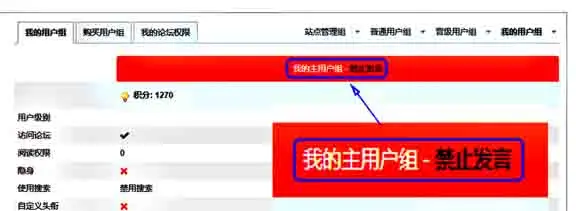
(Due to Ye, Qiquan’s firm adherence to his neutral stance during the 2019 debate, several large Chinese forums in Canada permanently or for life banned his articles and speaking rights.)
advertise:Currently, the ruling forces (Xi Jinping’s group ) , China’s backers in politics, and the Chinese military are all simultaneously mired in difficulties. None have been completely reborn, nor have any been completely destroyed. They could either suddenly be completely reborn or suddenly perish completely. At present, they all need to find a way out of their predicament . |
The Dilemmas and Potential Solutions Facing the “Chinese Way of Tradition” (Xi Jinping Group) in 2026-2027Offer of $ 1 million We provide a corresponding written proposal and can also offer an additional interview opportunity. (The weakening of the deep-seated forces after the Fourth Plenary Session should not be seen as a victory for Xi Jinping’s side. Nor should the isolation of Zhang Youxia be considered a major victory. Unless Xi Jinping’s group is fully revived by February 2027, they can only “slowly but surely proceed towards complete defeat according to the established procedures.” ) |
Potential escape plans for current leaders within China’s deep-seated political forces.Offer: $500,000 We will provide a written proposal and offer an additional interview opportunity. (Don’t fantasize that the leaders of deep-seated political forces have definitely won just because we’ve dragged things out until February 2027. Someone will have to step up and take responsibility for the political turmoil of 2025. Historical reckoning can be delayed for many years, or it can happen quickly. The leaders of deep-seated political forces may win, may exit with a draw, or more likely, they will step up and take responsibility. The future is uncertain.) |
The current predicament of China’s military leaders and potential solutions.Offer: $5 million Provide a written proposal; additional interview opportunities may be offered. (The military is both the strongest and the most vulnerable force. Chinese politics has never endowed the military with the armor of “moral authority.” Even if it smoothly passes February 2027, the slow demise of Xi Jinping’s side does not equate to a certain victory for the military leaders. Your current enemies may retaliate, your current allies may abandon you, and third-party unrelated parties will certainly not come to your rescue. Someone must be held accountable for the chaos of 2025. Generally speaking, military leaders are the most suitable candidates to take responsibility.) |
The Last Chance to Build a Kingdom (Political Fantasy and Hypothetical Planning)Base offer: US$10 million Statement: This does not constitute political advice or investment opportunity. It is provided as background information for interested individuals, families, groups, nations, or alliances to make decisions. Please exercise caution when making payments. Before making payments, thoroughly investigate the other party’s political background and analytical capabilities. It is recommended to communicate and exchange ideas with the author repeatedly beforehand and to make a full assessment of the actual value of the subject matter. Content: No content was disclosed. Potential value hints: It possesses significant geopolitical value, thereby ensuring investment value. Buyer qualifications: The leader or successor needs to have a certain level of political ability. You may need to fill out a series of assessment forms. It has the capacity to invest approximately $500 million in the initial phase over three years. Furthermore, it has the ability to mobilize $12 billion at any time. Buyer qualification recommendations: 1. Individual or Family: The buyer or their family must have at least four direct male relatives or descendants. These male relatives or descendants must not only possess certain political and practical abilities, but also be trustworthy to the buyer. 2. Target countries: Japan, Russia, Israel, or China are recommended as potential buyers. Other countries are not advised to participate in this matter. |
Advertising (Political Fantasy and Hypothetical Planning)
|
Geopolitical and historical challenges to Israel’s national and ethnic strategyBase offer: US$10 million Abstract: Since its establishment, Israel has consistently achieved military victories and become a de facto regional power. These victories have created the illusion, among Israelites and others, that Israel’s success depends on its overall competitive advantage. The continued existence of the Israeli state relies on four fundamental pillars: geopolitical needs; geopolitical values; national competitive advantages; and philosophical values. With the advent of the new imperial order, all four factors have faced severe challenges. Payment Risk: Purchasing involves significant risks. Please carefully weigh the potential risks against the value. Attachment: An interview opportunity may be provided free of charge. |
The most dangerous scenario for China to force the US to compromiseBase offer: US$10 million Synopsis: Lack Target customers: national entities and national alliances. Risk Warning: The contents of the project proposal have not been, and will not be, disclosed in advance. Potential buyers are advised to carefully assess the transaction risks. In addition to the written proposal, we will provide a one-month opportunity for joint communication.
|
What kind of policy should major powers have towards Iran?Offer: $10 million Content disclosure: It’s hard to say that major powers, including the United States, China, Russia, and Europe, have had successful policies toward Iran. The United States and Europe pursue a policy of containing Iran. Even with a series of tactical successes, their decades-long efforts can be summarized as “failure and frustration.” The repeated military strikes by the US-led coalition against Iran have not significantly weakened Iran’s overall national competitiveness and overall war-fighting capabilities. Russia’s and China’s policies toward Iran cannot be considered successful either. Neither country has gained significant economic or political benefits from their strategies toward Iran. Israel’s policy toward Iran can be summarized as a failure. Israel’s series of tactical successes cannot mask its strategic losses. Target customers: National entities, military alliances, and long-term investment capital that are deeply concerned with shifts in geopolitical power. risk: Before making any payments, please fully understand the seller’s political analysis capabilities, the potential returns of the investment, and the risks involved.
|
How can Japan shed its historical baggage and become a normal country and a regional leader ?Base price: $50 million Content: Japan’s long-standing mission is to reconnect with Asia. However, Japan’s historical baggage not only hinders this process but also prevents it from developing into a nation with equal standing in the region. Without revolutionary or groundbreaking ideas, Japan’s path to development will be extremely difficult. Risk Warning: Returns cannot be guaranteed. Please communicate thoroughly with the seller before making payment and carefully assess potential returns and investment risks.
|
China’s extreme governance plan for Taiwan after reunificationBase price: $1 million (sales will only begin after at least ten orders are received) or an exclusive purchase for $100 million. Content: China’s reunification is projected to be completed within the next decade. The Chinese central government faces pressure to ensure political stability in Taiwan, yet fears the historical responsibility it would have to bear. This is not only a significant contradiction but also a psychological obstacle to achieving reunification. The Chinese central government urgently needs to take action to find a solution that can simultaneously achieve both goals. Meanwhile, global long-term investors, political investors, large Taiwanese conglomerates, and mainland Chinese monopoly capital can reap substantial profits by understanding China’s fundamental policies and adjusting their investment strategies accordingly. Disclaimer: This article does not constitute investment advice. |
European Policy in China’s Unification ProcessOffer: $5 million Synopsis 1. How to fundamentally prevent Europe from joining the East Asian war as a whole, thereby eliminating the possibility of Europe becoming a production base for the United States’ war of attrition. 2. How to effectively compel the United States to accept a next-generation imperial order based on the “US-China axis” blueprint.
|
Predictions: Hong Kong ‘s political system, administrative divisions, and corresponding investment opportunities after 2047 .Price: $1 million This information can be used as background data by large corporations, long-term investors, and political forecasting and policy-making bodies when formulating long-term policies. (Not intended as investment advice.)
Prediction: Hong Kong’s political system and administrative divisions after 2047Price: $100 Provides general political predictions. Suitable as background information for personal interest, academic research, or background studies.
|